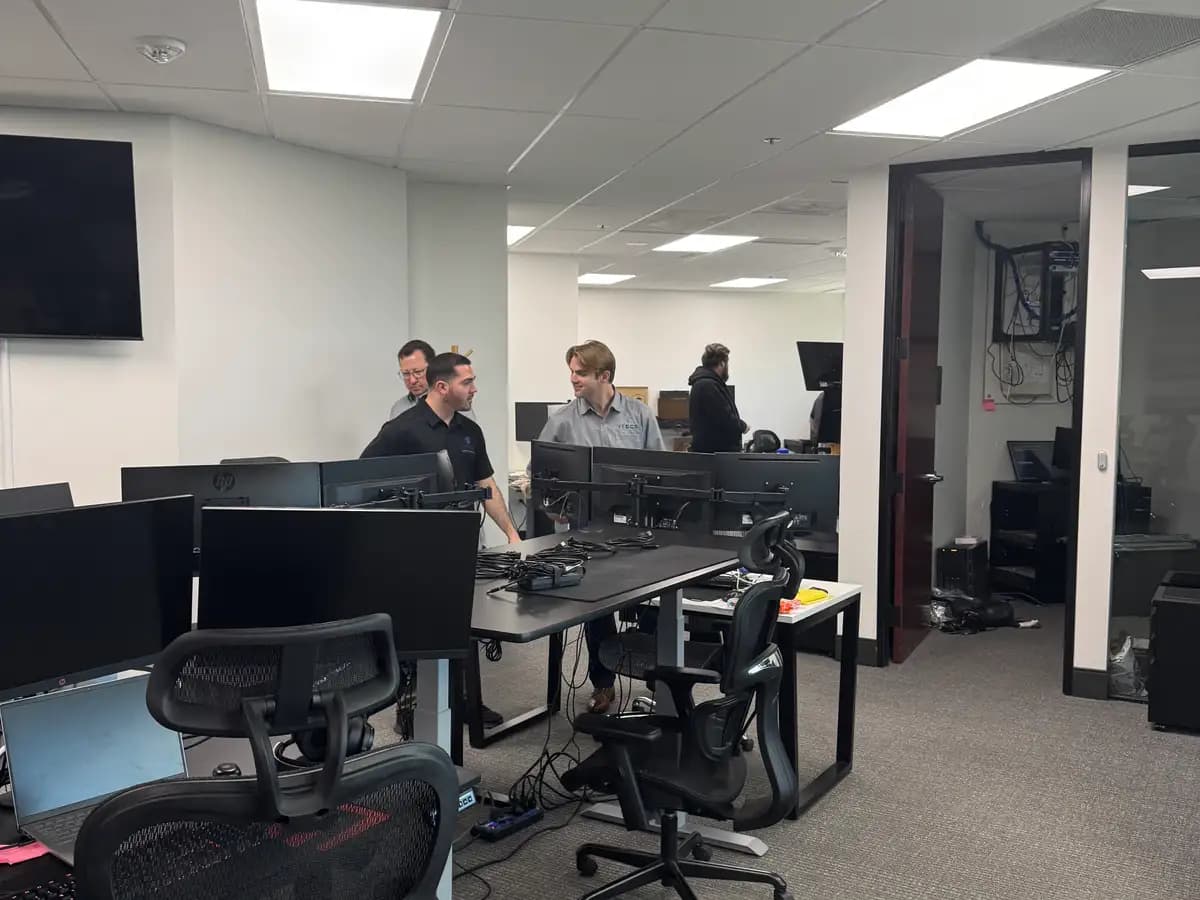
Oil & Gas IT Services for Dallas-Based Energy Teams
ITECS helps oil and gas operators, service companies, and support teams strengthen office IT, field connectivity planning, vendor access control, backup resilience, and cybersecurity across Dallas-based and distributed energy environments.
Oil and gas operations
IT support for teams balancing office systems, field sites, vendors, and remote access
Oil and gas organizations need dependable infrastructure across offices, remote users, field locations, and vendor-connected workflows. The support model has to be clear about what is corporate IT, what is field connectivity, what is vendor-managed operational technology, and where ITECS coordinates rather than replaces specialized OT providers.
ITECS supports Dallas energy and field-service teams that need stable communications, documented vendor coordination, and stronger security around remote access, Microsoft 365, endpoint protection, cloud collaboration, and shared business data.
We are especially useful where leadership wants a clearer view of risk across distributed teams, legacy systems, contractor access, and backup readiness without creating friction for people who need to move quickly between offices, sites, vendors, and customers.
Office + field
Support reality
Energy teams often need one operating model that covers headquarters, field personnel, remote users, and third-party contractors.
Vendor access
Control priority
Contractors, carriers, software vendors, and equipment providers need access paths with ownership, review, and documentation.
Recovery
Resilience baseline
Backup and access planning should reflect the systems that keep office, field, and customer-facing work moving.
Oil & Gas IT solutions
Start with the IT decision in front of you
This page explains the industry-specific operating model first. When you are ready to move from context to action, use the path that matches the decision your team needs to make next.
Managed IT services
Compare MSP plans, onboarding, SLAs, and executive-level outcomes for oil & gas organizations.
See managed IT plans
Cybersecurity services
Explore endpoint protection, compliance support, email security, and risk assessments tailored to oil & gas requirements.
Compare cybersecurity options
Managed cloud hosting
Private cloud, Azure, hosted applications, and virtual desktops for oil & gas teams that need reliable, managed infrastructure.
Explore cloud hosting
Case studies and white papers
See real-world results from ITECS engagements across regulated and uptime-sensitive industries.
Review case studies
Cybersecurity assessment
Get a structured view of your current controls, risk exposure, and priorities — designed for oil & gas leaders evaluating next steps.
Start the assessment
Risk concentration
Where oil and gas teams usually feel the highest IT pressure
In energy environments, IT issues are rarely just IT issues. They often affect field communication, contractor access, operational visibility, or recovery readiness. That is why distributed support and tighter controls matter so much in this vertical.
ITECS focuses on the failure points most likely to create operational drag: remote connectivity gaps, unmanaged third-party access, inconsistent endpoint standards, weak documentation, and backup plans that look fine on paper but have not been tested against actual workflows.
Our job is to help leadership replace uncertainty with a more resilient, better-documented operating model while staying honest about the boundary between MSP-owned systems, vendor-managed systems, and OT-specialist responsibilities.
Field connectivity and remote users
Remote sites, traveling staff, and contractor-heavy workflows can create a fragile environment if connectivity and identity management are not designed intentionally.
- Connectivity planning for remote access, failover, and mobile work
- Support for field laptops, cloud collaboration, secure data exchange, and user access
Third-party access exposure
Vendors, contractors, and external specialists often need system access, but unmanaged permissions create unnecessary risk and poor auditability.
- Role-based access reviews, MFA enforcement, and better admin-account discipline
- Clearer ownership over who can access what, why they need it, and who reviews it
Weak recovery readiness
Energy teams cannot rely on hope when an outage or ransomware event affects data, communications, or operational workflows across multiple stakeholders.
- Backup strategies tied to business impact, not just storage volume
- Recovery testing that informs realistic incident and outage expectations
Energy operations model
The oil and gas IT model has to separate office IT, field connectivity, vendor access, and OT coordination
A useful oil and gas IT plan starts by naming the boundary. ITECS supports and coordinates the business technology layer: users, endpoints, Microsoft 365, secure remote access, backups, cloud tools, vendor escalation, and the documentation that keeps distributed teams supportable.
When operational technology, control systems, measurement platforms, or specialized field equipment are involved, the MSP role should be clearly defined. ITECS can coordinate access, network dependencies, vendor handoffs, endpoint security, and recovery planning around those systems, but the page should not imply that a general MSP replaces dedicated OT engineers, control-system integrators, or safety-system specialists.
This operating map gives leadership a practical way to identify where risk sits before deciding whether the next project is a help desk fix, a remote-access cleanup, a vendor-access review, a backup exercise, or a larger infrastructure roadmap.
Corporate and field IT
The systems ITECS can directly support or manage as part of the business technology environment.
- Microsoft 365, email security, Teams, shared files, identity, MFA, and user onboarding
- Field laptops, mobile users, endpoint protection, patching, remote support, and device standards
- Branch, office, and field connectivity planning with carriers, firewalls, VPN, and secure access paths
Vendor and contractor access
The handoffs that need ownership when outside parties support systems, software, carriers, or field workflows.
- Documented vendor contacts, support paths, escalation ownership, and access requirements
- Privileged-account reviews for contractors, third-party administrators, and software vendors
- Secure remote-access patterns that reduce shared-account, unmanaged-device, and stale-permission risk
OT-adjacent coordination
The boundary area where IT support touches specialized operational systems without pretending to own them.
- Coordination with OT vendors, control-system specialists, equipment providers, and internal operations leaders
- Network, endpoint, identity, and backup dependencies around vendor-managed operational platforms
- Clear documentation of what ITECS manages, what the vendor manages, and what requires specialist review
Recovery and reporting
The leadership layer that turns technical work into a usable view of resilience, risk, and next steps.
- Backup scope, recovery assumptions, and test results tied to office and field workflows
- Reporting on recurring access issues, endpoint drift, vendor bottlenecks, and unresolved dependencies
- Roadmap planning for the highest-impact improvements before tools are added
This section intentionally avoids claiming direct operation of SCADA, ICS, safety, or specialized field-control systems. The goal is a clean IT and vendor-coordination boundary.
Security and operational resilience
Energy IT governance has to account for distributed risk and contractor reality
Oil and gas organizations often need a stronger baseline for identity, vendor access, backup discipline, and documentation because remote work and third-party involvement expand the attack surface quickly. Practical governance is what keeps distributed environments supportable without turning every field issue into a slow committee process.
ITECS helps teams tighten Microsoft 365, remote access, endpoint visibility, vendor documentation, and continuity planning so office and field teams can move faster with less uncertainty. We focus on making the environment easier to secure and easier to explain to leadership.
That includes the policies, technical controls, and vendor coordination needed to answer harder questions from clients, insurers, and internal stakeholders without improvising every time a carrier, software provider, or field team is involved.
- Identity controls and MFA for staff, vendors, and privileged accounts
- Backup and recovery playbooks tied to office, field, and shared data dependencies
- Security reviews that support insurer, client, and internal risk-management conversations
Oil and gas IT priorities
Remote field access, office connectivity, and communications resilience
Third-party and contractor access governance
Data backup, recovery testing, and incident-readiness planning
Documentation around cloud tools, line-of-business systems, and vendor dependencies
Recommended service stack
The support and resilience layers energy teams usually need first
Oil and gas environments usually need a combination of structured MSP delivery, cyber governance, secure remote access, vendor coordination, and dependable backup planning. We emphasize service lines that improve resilience quickly without making field work harder or overstating what a general MSP should own.
These pages go deeper on the service layers most often tied to energy and industrial IT stabilization efforts: support ownership, secure access, recoverability, and cloud or hybrid infrastructure decisions.
Managed IT services with leadership oversight
Our core MSP model shows how ITECS handles support, escalation ownership, and roadmap planning for companies that need a more mature operating baseline.
- Useful when leadership wants one accountable partner
- Supports both day-to-day issues and broader modernization decisions
Cybersecurity consulting for distributed environments
Energy teams often need better visibility into identity, vendor access, remote-access exposure, remediation priorities, and executive reporting around cyber risk.
- Helps turn scattered tools into a more coherent security program
- Useful when insurer and stakeholder expectations are rising
Backup and disaster recovery
Recovery planning becomes critical when data, communications, and operational workflows span office users, field teams, vendor-managed platforms, and outside parties.
- Protects against ransomware and outage scenarios with documented recovery goals
- Improves confidence around worst-case planning
Managed cloud and hosted infrastructure
When remote users, shared applications, reporting systems, or legacy workloads need a more supportable hosting model, cloud strategy often becomes part of the fix.
- Supports remote access and application continuity
- Useful for teams rationalizing hybrid infrastructure
Why ITECS
A DFW MSP approach built for distributed environments and higher consequences
Oil and gas teams need a partner that can think beyond isolated tickets. ITECS brings structure to support, vendor coordination, access governance, and risk communication so leadership gets a better handle on operational IT exposure across office and field workflows.
We focus on pragmatic improvements that make the environment easier to run, easier to secure, and easier to explain when the stakes are higher than a typical office outage.
Vendor coordination with ownership
ITECS helps prevent carrier, contractor, field-technology, and software issues from stalling because nobody owns the end-to-end outcome.
- One accountable team for support follow-through
- Clearer escalation paths across internal and external stakeholders
Leadership-ready reporting
We communicate recurring issues, cyber priorities, and recovery risk in a way that helps management make operational decisions—not just close tickets.
- Useful for budget planning and risk conversations
- Supports more disciplined roadmap decisions over time
Proof-oriented delivery
If you want to see how ITECS presents outcomes and project work, our case-study library provides a clearer picture than generic MSP promises.
- Helps compare communication quality and implementation maturity
- Supports a more informed vendor-evaluation process
How engagement works
How we stabilize oil and gas environments without creating more complexity
We start by understanding the real dependencies between office systems, remote users, field workflows, and external vendors. Then we harden the environment, tighten access, and document ownership so distributed issues stop turning into prolonged risk events.
The result is a support model that is more resilient, more explainable, and easier for leadership to manage without blurring responsibility for specialized operational systems.
Phase 1
Oil and gas workflow discovery
We inventory remote access patterns, third-party dependencies, field connectivity realities, and the cloud or on-prem business systems operations rely on every day.
Phase 2
Security and continuity hardening
We address the highest-risk identity, endpoint, and backup gaps first so the environment becomes easier to recover and easier to secure.
Phase 3
Vendor and platform alignment
We document vendors, access paths, OT-adjacent handoffs, and escalation ownership so incidents do not stall across outside providers and internal teams.
Phase 4
Leadership cadence and optimization
We establish recurring review rhythms for cyber posture, recovery planning, and the infrastructure decisions most likely to affect operational resilience.
Related resources
Explore the services that support resilient energy operations
These pages give more detail on the MSP, cyber, cloud, and recovery services that typically matter most for distributed and contractor-heavy environments.
They are useful when leadership wants to separate marketing claims from the actual support model behind an industry page.
Dallas managed IT services
Review the core managed IT model we adapt for oil and gas teams teams that need stronger accountability and executive visibility.
Cybersecurity services
Compare the security, compliance, and assessment paths that support oil and gas teams teams with tighter controls and clearer risk reporting.
Managed cloud services
Explore hosted infrastructure, Azure, private cloud, and continuity options that keep oil and gas teams operations resilient.
Cybersecurity assessment
Use the assessment path when oil and gas teams leadership needs a faster read on current risk, control gaps, and next-step priorities.
Case studies and white papers
Review supporting material that shows how ITECS approaches technology planning, communication, and project delivery.
Oil and gas IT services FAQ
Questions Dallas energy teams ask when evaluating resilient IT and cybersecurity support.
Yes. We help organizations coordinate support across office staff, remote users, field teams, and vendors so access, device, and connectivity issues are handled under one more accountable operating model.
ITECS does not position this service as a replacement for OT engineers, SCADA specialists, control-system integrators, or safety-system providers. We support the business IT layer and coordinate secure access, vendor handoffs, documentation, endpoints, networking, and recovery planning around specialized systems where appropriate.
We review identity controls, privileged access, MFA, remote-access methods, and documentation so organizations have better visibility into who has access, why they have it, and how that access is governed over time.
Yes. ITECS helps teams design recovery strategies tied to operational priorities, shared data, and remote-access realities so backup planning reflects actual business impact.
We combine responsive support with stronger vendor coordination, leadership reporting, and security planning, which is especially important in environments where office systems, remote users, and outside partners are tightly connected.
Next step
Need a more resilient IT operating model for field and office teams?
ITECS can review your remote-access risks, vendor dependencies, and recovery posture so leadership gets a clearer path to stronger oil and gas IT operations.